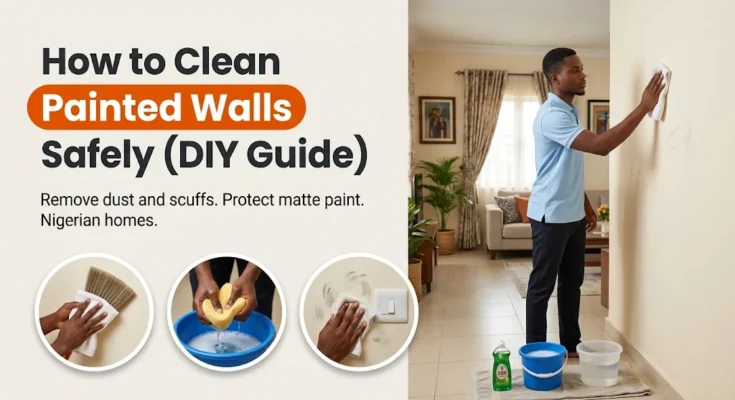
Bright cream parlour walls and airy hallway corridors have a way of turning dingy around light switches, sofa backrests, and dining table corners long before the paint itself wears out. Between fine reddish Harmattan dust blowing through window screens, black generator soot, kitchen frying mist, and sticky fingerprints, interior walls in Nigerian homes collect a surprising layer of grime every few months.
Grabbing a wet sponge and scrubbing with harsh powdered washing detergent often makes the mess ten times worse—rubbing chalky bald patches into flat emulsion paint or leaving muddy water rings across the plaster. Knowing how to clean painted walls according to their exact paint finish lets you lift away grease, soot, and scuff marks in a single afternoon without stripping a single fleck of colour.
Not all house paints react to water the same way. While washable satin, silk, and oil-based gloss paints form a sealed plastic-like skin that shrugs off damp wiping, standard matte emulsion paint is porous and slightly chalky. Using too much water or an abrasive sponge on flat emulsion dissolves the surface pigment and polishes an ugly shiny spot right into the middle of your wall.
Once you understand how to clean painted walls by dry-dusting the red grit first, testing your paint sheen, and washing from the floor upward with a barely damp microfibre cloth, your rooms will look freshly painted without opening a tin of emulsion.
Step 1: Identify Your Finish Before You Clean Painted Walls
Before touching a wall with water, rub your clean dry palm across a hidden corner of the room and look at how the surface reflects ceiling light. Matching your cleaning method to the paint sheen is the secret to mastering how to clean painted walls safely.
| Paint Finish | Surface Feel | Water Tolerance | Safe Cleaning Mix |
| Standard Matte Emulsion | Chalky and flat | Low | Plain warm water or 2 drops dish soap |
| Premium Vinyl Matte | Smooth velvet | Medium | Warm water and half teaspoon dish soap |
| Acrylic Satin or Silk | Soft low sheen | High | Warm water, dish soap, and white vinegar |
| Oil-Based Gloss | Hard mirror shine | Very High | Warm soapy water and baking soda paste |
Understanding how these four common Nigerian wall finishes behave prevents accidental paint damage:
- Standard matte emulsion: Used in most rented flats, ceilings, and guest bedrooms; it absorbs water quickly and will rub off onto your rag if scrubbed aggressively.
- Vinyl matte and velvet emulsion: Upgraded living room paints contain extra acrylic resin, allowing gentle spot-wiping with a wrung-out microfibre cloth.
- Acrylic satin, silk, and kitchen paint: Formulated with a tight polymer film that resists moisture and wipes clean easily in hallways, children’s rooms, and staircases.
- Solvent-based oil gloss: Commonly brushed along the bottom three feet of school corridors, compound passages, and older parlours; it handles thorough degreasing without fading.
Important Safety Warnings Before Washing Walls
Washing vertical walls near electrical fittings and tiled floors carries a few household hazards. Follow these safety rules before starting your cleanup:
- Switch off circuit breakers first: Water trickling behind a plastic light switch or wall socket can cause a dangerous electric shock, so turn off that room’s breaker at your distribution board.
- Never use green scouring pads or wire sponges: Abrasive kitchen scrubbers scratch deep swirl marks into satin sheen and strip flat emulsion down to bare grey plaster in seconds.
- Test in a hidden spot behind furniture: Always dab your damp cloth on a low corner behind the sofa or curtain first; if thick paint colour transfers onto the white cloth, use dry cleaning methods only.
- Lay dry towels along the floor skirting: Catching drips at the base of the wall prevents soapy puddles from making your ceramic floor tiles dangerously slippery.
Tools Needed for How to Clean Painted Walls
You can put together a complete kit for how to clean painted walls using gentle household items already sitting in your kitchen cupboard:
- Four soft white microfibre cloths or natural cellulose sponges: White cloths let you see removed dirt clearly without bleeding fabric dye onto pale cream or white paint.
- Two plastic buckets: Fill the first bucket with your mild washing solution and the second bucket with plain, clean rinse water.
- Clear liquid dish soap: A gentle, pH-neutral degreaser (just a few drops) cuts through skin oils and kitchen mist without harsh bleaching agents.
- Baking soda (sodium bicarbonate): Acts as a non-scratch stain lifter for rubber shoe scuffs, furniture marks, and crayon lines.
- Distilled white vinegar: Two tablespoons added to warm water helps cut heavy cooking film on washable satin or gloss kitchen walls.
- Long-handled broom and a dry towel: Wrapping a dry towel over a clean broom head lets you sweep high ceiling corners without climbing unstable chairs.
- Soft white pencil eraser or melamine foam sponge: Useful for gently lifting dry pencil marks and dark hand smudges off light walls.
Step 2: Dry-Dust Every Wall from Top to Bottom First
The biggest mistake homeowners make when figuring out how to clean painted walls is putting a wet sponge straight onto a dusty wall. Across Nigeria, indoor walls hold a microscopic film of fine reddish-brown Harmattan clay dust and black soot from cooking or neighbourhood generators. The moment wet water hits dry Harmattan dust, it turns into liquid mud that soaks deep into porous emulsion paint and leaves permanent brown streaks.
- Clear furniture 2 feet away from the walls: Slide chairs, side tables, and bed frames slightly inward so you can move freely along the full length of the room.
- Sweep ceiling corners and cornices: Use a dry cobweb brush to clear spiderwebs and loose plaster dust from the upper wall seams and behind window curtain rods.
- Wrap a dry microfibre towel over your broom head: Secure a clean, dry towel around a soft broom bristles using a thick rubber band.
- Wipe dry from ceiling to floor: Glide the towel-wrapped broom down the wall in overlapping vertical lanes to trap loose dust and dry soot before introducing a single drop of water.
- Brush off window frames and door trim: Use a dry 2-inch paintbrush or cloth to flick settled dust off the top ledge of wooden door frames and ceramic floor skirtings.
Step 3: How to Clean Painted Walls Coated with Matte Emulsion
Standard flat or matte emulsion paint requires a delicate touch because it contains high levels of chalky pigment and less protective plastic binder. For a deeper look at how pigment volume concentration affects paint porosity and washability, see Wikipedia’s overview of Paint.
Follow this two-bucket, low-moisture technique when learning how to clean painted walls finished in flat emulsion:
- Mix a weak soap solution: Fill your first bucket with 4 litres of lukewarm water and stir in just half a teaspoon of clear liquid dish soap—too much soap leaves a sticky film that attracts fresh dust.
- Fill your second bucket with plain water: Keep a separate sponge or microfibre cloth in this second bucket strictly for rinsing away soap residue.
- Wring the washing sponge until it is barely damp: Squeeze the sponge tightly with both hands until zero water drips out when you hold it in the air.
- Wash from the BOTTOM of the wall UPWARD: Always start at the floor skirting and work upward in 1-metre sections! If you start at the ceiling, stray trickles of dirty water will run down across the dry, dusty wall below and bake in permanent vertical track marks that cannot be washed out.
- Dab and glide without scrubbing hard: Wipe in soft, wide circular motions using light palm pressure—never dig your fingertips into a single spot.
- Rinse and pat dry immediately: Wipe the cleaned section once with your wrung-out plain-water cloth, then pat the plaster dry with a clean cotton towel so water never sits on the emulsion.
Step 4: Deep-Clean Washable Satin, Silk, and Oil Gloss Walls
If your hallway, staircase, children’s bedroom, or kitchen is coated in acrylic satin, silk emulsion, or oil-based gloss paint, the sealed surface can handle a slightly stronger degreasing recipe. Here is how to clean painted walls with a washable sheen:
- Mix a warm degreasing wash: In 4 litres of warm water, combine 1 teaspoon of liquid dish soap and 2 tablespoons of white household vinegar.
- Wipe in overlapping circular passes: Working from the bottom of the wall upward, wipe a 1-metre square section with a damp microfibre cloth to dissolve airborne cooking oil and hand smudges.
- Rinse with your plain-water cloth: Follow immediately with a clean damp cloth from your second bucket to remove all vinegar and soap traces.
- Buff dry to prevent water spots: Satin and gloss paints show dried water droplets under electric bulbs; buff each section dry with a soft towel as you go.
Step 5: Remove Stubborn Nigerian Household Wall Stains
Sometimes an entire room looks clean except for a few dark eyesores near switches, beds, or doorways. Target these specific blemishes carefully when working through how to clean painted walls:
1. Oily Handprints Around Light Switches and Behind Headboards
Where people rest their heads against a parlour wall behind a settee or grope for the bedroom light switch in the dark, skin oils soak into the paint.
- The Baking Soda Paste Method: Mix 3 tablespoons of baking soda with 1 tablespoon of water to form a soft paste. Dab it gently over the greasy mark with a damp microfibre cloth, wait 2 minutes for the alkaline powder to lift the oil, wipe clean with a damp rinse cloth, and pat dry.
- The Dry Cornstarch Trick (For Fresh Oil Splashes): If palm oil or lotion splashes onto a matte bedroom wall, press dry cornstarch or baby talcum powder onto the spot immediately, let it sit for 15 minutes to draw the oil out of the pores, and brush it off before dabbing with a damp cloth.
2. Black Generator Soot and Smoke Smudges
Never rub wet water over black diesel soot or candle smoke marks first—wetting carbon soot smears it like black shoe polish across the paint.
- Lift soot dry first: Dab (do not drag) a dry vulcanized rubber “soot sponge” or a ball of soft white bread crusts over the black smudge to pull the dry carbon particles off the surface, then wipe lightly with your wrung-out soapy microfibre cloth.
3. Black Shoe Scuffs, Chair Marks, and Crayon Lines
Where dining chairs or children’s shoes bump the lower wall, dark rubber and wax streaks stick to the surface.
- Erase gently: Rub a clean, soft white stationery eraser lightly over pencil or rubber scuff marks. For stubborn chair rubs on satin paint, dampen a corner of a melamine foam sponge (magic eraser), squeeze it nearly dry, and stroke the mark with feather-light pressure—scrubbing hard with melamine foam acts like fine sandpaper and dulls shiny paint.
4. Bathroom Mildew vs. Peeling Damp Plaster
If dark grey or black pepper spots appear on your bathroom or kitchen walls, ordinary soap will not kill the fungus. Treat live mildew spores safely using the undiluted vinegar spray method in our guide on How to Remove Mold from Bathroom Walls Safely.
If you notice the paint bubbling, blistering, or flaking off the cement while cleaning near the floor, stop washing that area immediately—water is trapped inside the blockwork. Let the wall dry and repair it permanently using our tutorial on How to Fix Peeling Wall Paint in Damp Rooms, or give faded rooms a fresh start with How to Repaint a Room Like a Pro. Finally, once your walls are spotless, mop up any dusty floor splashes using the steps in How to Clean and Seal Floor Tiles.
Common Mistakes to Avoid When Cleaning Painted Walls
Steer clear of these four costly errors when tackling how to clean painted walls:
- Using powdered laundry detergent or bleach on coloured emulsion: Harsh washing powders (like Omo or Ariel) and chlorine bleach contain optical brighteners and strong alkalis that strip pigment out of cream, peach, or grey emulsion paint, leaving pale bleached blotches.
- Starting at the top of the wall with a dripping sponge: Dirty water running down over dry lower walls creates permanent vertical “clean tracks” that even a second washing cannot erase; always wash from the bottom upward with a wrung-out cloth.
- Scrubbing a newly painted wall too soon: Fresh acrylic emulsion and satin paints feel dry to the touch in a few hours, but the resin takes a full 14 to 30 days to cure hard; never wet-wash a wall during the first month after painting.
- Using coloured rags or printed newspaper: Wetting a red or blue duster—or rubbing wet newspaper—transfers ink and fabric dye straight into light-coloured plaster walls.
Frequently Asked Questions (FAQs)
How do I clean painted walls without taking the paint off?
The safest way to master how to clean painted walls without rubbing the colour off is to dry-dust the wall first, use a soft white microfibre cloth wrung out until it is barely damp in lukewarm water with just two drops of mild dish soap, and dab gently without scrubbing. Always rinse with a second damp cloth and pat dry with a towel immediately.
Why did my matte wall paint turn shiny where I scrubbed a stain?
That shiny patch is called burnishing. Flat matte paint gets its non-reflective look from microscopic mineral particles sitting near the surface; rubbing one spot hard with a rough sponge or towel polishes those particles flat like a mirror. Avoid hard finger pressure on matte emulsion, and if a small spot burnishes, dab a tiny amount of matching leftover matte wall paint over the spot with a dry foam sponge to restore the flat texture.
How often should I wash painted interior walls in Nigeria?
Dry-dust your interior walls with a towel-wrapped broom once a month (and every two weeks during peak Harmattan between December and February), spot-clean fingerprints around light switches and doorways every 4 to 6 weeks, and give high-traffic hallways and kitchens a full damp wipe-down once or twice a year.
Final Thoughts
Taking an hour to dry-sweep settled Harmattan dust, mix a gentle drop of dish soap in warm water, and wipe from the floor skirting upward with a soft microfibre cloth proves just how easy it is to master how to clean painted walls. Instead of living with dingy switch plates, smoky corners, or scuffed hallways, your walls will stay bright, fresh, and spotless year after year.