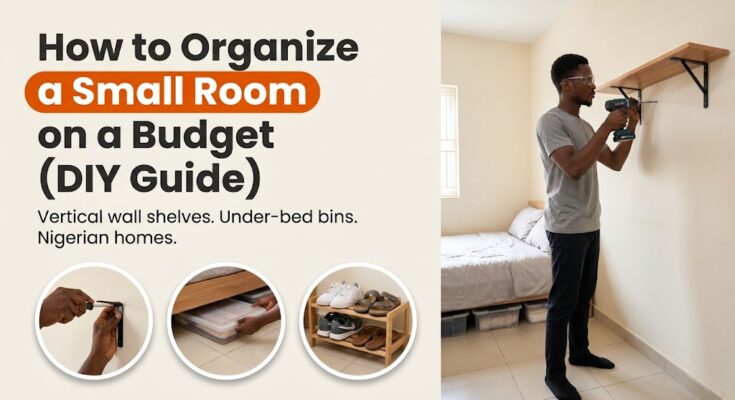
Figuring out how to organize a small room on a budget is one of the fastest ways to make a cramped bedroom, student hostel, or single-room apartment feel twice as big without spending a fortune on furniture. Anyone who has lived in a compact Nigerian “self-contain” apartment or managed a small box room in a family flat knows how quickly everyday items take over. You start with a mattress, a standing fan, and a small wardrobe, and within six months, travelling bags, shoe boxes, extension cords, water kegs, and laundry baskets have eaten up every inch of walking space.
When a small room gets cluttered, it does more than just look untidy. In warm tropical weather, piles of clothes and badly placed wardrobes block cross-ventilation from your windows, trapping heat and making the room stuffy at night. Most people assume the only fix is to rent a bigger apartment or pay a carpenter hundreds of thousands of naira to build a floor-to-ceiling wardrobe. In reality, you can transform the space you already have in a single weekend using basic hand tools, affordable local materials, and smart layout adjustments.
Drawing from practical home improvement and carpentry experience, this guide breaks down how to organize a small room on a budget step by step. You will learn how to clear floor bottlenecks, put your solid block walls to work, hide bulky seasonal items under the bed, and arrange your furniture so your room stays bright, breezy, and clutter-free.
Why Knowing How to Organize a Small Room on a Budget Matters
Compact bedrooms and studio rooms come with unique structural realities. In most Nigerian houses, interior walls are built from solid six-inch or nine-inch sandcrete blocks plastered with cement. While these thick walls don’t give you built-in drywall closets, they offer a massive advantage for DIYers: they can hold serious vertical weight when drilled properly with wall plugs. At the same time, most rooms have generous ceiling heights of nine to ten feet, meaning the top half of your room is completely empty while the floor is jammed.
Understanding how to organize a small room on a budget means shifting your storage off the tiled or cemented floor and moving it upward into that wasted vertical space. When you clear at least sixty percent of your visible floor area, two things happen immediately. First, sweeping and mopping take five minutes instead of half an hour because you aren’t constantly lifting boxes and shoes out of the way. Second, air from your louver or casement windows can travel freely across the room, keeping indoor humidity down and preventing that damp, musty smell that settles behind crowded corners during the rainy season.
Tools and Affordable Materials Needed
You do not need expensive imported plastic organizers from high-end supermarkets to master how to organize a small room on a budget. Most of the best storage upgrades come straight from your neighborhood timber market, hardware shop, or basic household supply store:
- Seasoned timber planks: Ask a local sawmill to plane 1-by-10-inch or 1-by-12-inch mahogany or obeche wood into smooth 3-foot or 4-foot shelf boards.
- Heavy-duty L-brackets: Buy painted steel angle brackets (8-inch or 10-inch size) from any building hardware stall.
- Wall plugs and screws: Use 8mm or 10mm plastic Fischer plugs paired with 2-inch steel wood screws for solid block walls.
- Flat storage bins: Pick up low-profile plastic basins with lids or sturdy wooden crates that slide easily under a bed frame.
- Over-the-door hooks: Metal hanger racks that slip over the top edge of a wooden door without drilling a single hole.
- Cable clips: A small pack of 6mm or 8mm nail-in plastic clips to pin messy extension and stabilizer wires along the wall skirting.
- Basic DIY tools: A hammer drill with a masonry bit, a Phillips screwdriver, a measuring tape, a pencil, and a spirit level.
Step 1: Ruthless Decluttering and the Three-Zone Rule
Before you buy a single bracket or move your bed, you have to stop storing things that no longer earn their keep. In a small room, every square foot of floor space is prime real estate. If you try to organize clutter without thinning it out first, you are just rearranging the mess.
Start early on a Saturday morning by pulling everything that isn’t heavy furniture out into the hallway, balcony, or veranda. Seeing your empty room resets your perspective and shows you the actual footprint you have to work with. Once everything is outside, apply a strict sorting routine and divide the room into clear functional zones:
- Purge broken items: Toss or sell burned-out phone chargers, empty appliance cartons, single shoes, and clothes you haven’t worn in a year.
- Map the sleeping zone: Dedicate the quietest corner away from the door strictly to your bed and a small bedside surface.
- Set the dressing zone: Group your wardrobe, mirror, and shoe storage along one wall so your morning routine stays in one spot.
- Clear the work corner: Keep a compact table or folding desk near the window where natural daylight and fresh air are strongest.
Knowing how to organize a small room on a budget starts with discipline during this stage. Empty cardboard cartons are one of the biggest space thieves in small bedrooms, and worse, they attract cockroaches and absorb dampness during wet months. Flatten and discard old boxes unless you urgently need one for a warranty return.
Step 2: How to Organize a Small Room on a Budget Using Vertical Wall Space
Once you have pared down your belongings, look up. The space from eye level up to the ceiling is your best asset when learning how to organize a small room on a budget. Instead of buying another narrow plastic drawer tower that eats up floor tiles and wobbles when loaded, install high floating shelves using steel L-brackets and planed timber.
The single best spot for a high shelf is the dead wall space directly above your bedroom door frame. Nobody walks there, and because it sits behind you when you enter the room, your eyes barely notice it. A single 12-inch-deep wooden plank mounted fourteen inches below the ceiling above the door can hold two large travelling suitcases, spare bedsheets, winter blankets, and dry bulk supplies completely out of your daily path.
When drilling into plastered Nigerian block walls to mount shelves, take your time so the mortar doesn’t crumble. If you run into minor plaster damage while moving old nails, check our guide on how to patch a hole in a wall before painting or mounting new brackets. Mark your bracket holes using a spirit level so your shelf doesn’t tilt to one side. Drill cleanly into the solid block behind the plaster, tap your plastic wall plugs flush with a hammer, and drive your screws tight with a screwdriver. If you have a collection of textbooks, notebooks, or small electronics cluttering your table, you can also follow our tutorial on how to build a simple wooden bookshelf to create a slim, vertical storage unit that fits into a narrow 18-inch wall gap.
Step 3: Maximize Under-Bed and Behind-Door Storage
A standard four-by-six or three-by-six wooden bed frame takes up a huge chunk of a small bedroom, yet the hollow space underneath it often becomes a dusty graveyard for stray slippers and forgotten bags. Turning the area under your bed into a clean, structured “horizontal wardrobe” is a game-changer when working out how to organize a small room on a budget.
If your bed frame sits too low to the floor to slide storage containers underneath, you don’t need a new bed. Ask a local carpenter to cut four solid 4-by-4-inch hardwood blocks, each about six inches tall, with a shallow recess chiselled into the top of each block so the bed legs sit securely inside without slipping. Raising the bed by five or six inches creates enough clearance for four to six flat plastic storage bins with snap-on lids.
Always use closed containers or thick zippered bags under the bed rather than pushing loose clothes or open basins underneath. During the harmattan season, fine dust settles under low furniture every single day, and during the peak rainy season, floor-level air near concrete slabs stays cool and humid. Sealed plastic bins keep folded native wear, spare towels, and out-of-season shoes crisp and dust-free.
Don’t ignore the back of your wooden entry door and wardrobe doors either:
- Hang daily bags: Slip an over-the-door metal hook rack over the bedroom door to hold backpacks, work bags, and belts off the floor.
- Mount a narrow rack: Screw two small wooden battens or towel rails inside your wardrobe door to hang pressed trousers and ties flat.
- Contain footwear: Place a compact vertical rack right by the door—see our guide on how to build a simple wooden shoe rack—so sandals and sneakers never scatter across the walkway.
Step 4: Smart Furniture Arrangement for Airflow and Light
Even after decluttering and building shelves, poor furniture placement can make a room feel claustrophobic. Many people push their bed parallel to the window and stick a tall wardrobe right next to the window frame, cutting off half the daylight and blocking the evening breeze.
When planning how to organize a small room on a budget, push the long side of your bed flush against the longest solid wall away from the doorway. Having two open walkways on both sides of a bed is a luxury meant for large master bedrooms; in a compact room, cornering the bed opens up a wide, unbroken rectangle of floor space in the center of the room. Keep tall furniture like wardrobes or standing shelves against the wall that shares the door frame so that the moment you walk in, your line of sight travels straight across an open, bright room toward the window.
Finally, tame your electrical cords. Nothing makes a small room look chaotic faster than a tangle of black stabilizer wires, phone chargers, and generator changeover lines snaking across the middle of the floor. Nail plastic cable clips every twelve inches along the top edge of your floor skirting board to route your extension cord neatly around the perimeter of the room. If a bulky standing fan is constantly taking up floor space and tripping you up at night, consider clearing that footprint permanently by checking our step-by-step guide on how to install a ceiling fan.
Common Mistakes to Avoid in Compact Rooms
Even well-intentioned DIYers run into a few classic traps when figuring out how to organize a small room on a budget:
- Using stick-on hooks: Cheap peel-and-stick plastic hooks fail quickly on humid Nigerian emulsion paint, dropping your bags and peeling the wall paint right off.
- Buying deep wardrobes: A massive 24-inch-deep wardrobe swallows a narrow room; stick to 16-inch or 18-inch depths or open wall rails with a washable curtain.
- Leaving floors crowded: Keeping water kegs, cooking gas cylinders, and shoe piles on the open floor makes a room look half its actual size.
- Hanging dark curtains: Heavy, dark brown or black curtains absorb light and make walls feel like they are closing in; use light cream or sheer cotton blinds instead.
Frequently Asked Questions (FAQs)
How can I organize a small room on a budget if my landlord doesn’t allow drilling into the walls?
If your tenancy agreement prohibits drilling into the block walls, focus on freestanding vertical height and under-bed clearance. You can learn how to organize a small room on a budget without a drill by raising your bed on timber blocks for under-bed bins, using over-the-door metal hook racks, and building a tall, narrow freestanding wooden shelf unit that leans securely against the wall using its own weight.
How do I stop clothes stored in a small room from smelling musty during the rainy season?
In compact rooms where clothes are packed closely together, moisture builds up fast. Never pack slightly damp clothes or recently worn shirts straight into a closed wardrobe or under-bed bin. Place small breathable bowls of charcoal or silica gel packets inside your storage bins and wardrobe corners to absorb excess dampness, and open your wardrobe doors for an hour on dry, sunny afternoons while your room fan is running.
How much does it realistically cost to organize a small room in Nigeria using DIY methods?
You can complete a full room overhaul for very little money if you skip fancy imported storage racks. Buying two planed timber planks from a local sawmill, four steel L-brackets, a pack of wall plugs, cable clips, and two or three large lidded plastic under-bed basins at an open market costs a fraction of a ready-made cupboard while giving you far more usable space.
Putting these simple adjustments into practice proves that mastering how to organize a small room on a budget comes down to smart habits rather than a fat bank account. By clearing the floor, mounting high shelves over the doorway, tucking sealed storage bins under the bed, and routing cables neatly along the skirting, your room will feel calmer, cooler, and much more spacious right away.