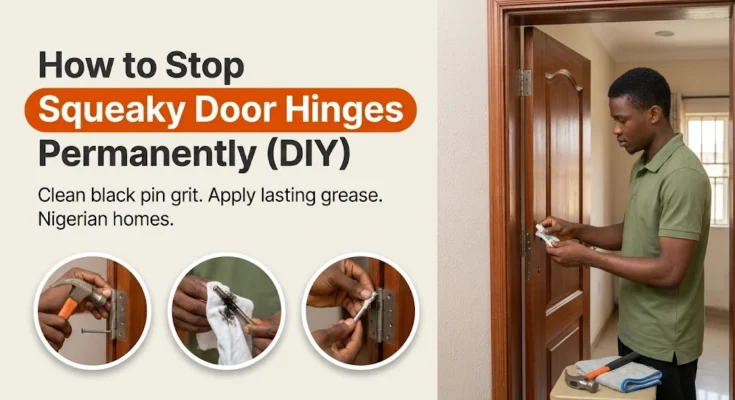
Tip-toeing out of the bedroom early in the morning or heading to the kitchen late at night for a glass of water becomes impossible when the wooden door lets out a piercing metallic screech that echoes down the hallway.
Across Nigerian homes, heavy hardwood doors, fine Harmattan dust, and high rainy-season humidity wear down hinge lubrication quickly. Many people grab a bottle of vegetable cooking oil from the kitchen shelf and dribble it over the metal knuckles—only to discover a week later that the oil has turned into a thick, rancid black gum that makes the screech twice as loud. Knowing how to stop squeaky door hinges the right way means flushing out that abrasive metal sludge and coating the internal pin with a non-gumming lubricant that lasts for years.
Every standard butt hinge works by wrapping two interlocking metal plates around a central steel or brass pin. Every time you swing the door open, those metal knuckles grind against the pin under 20 to 40 kilograms of door weight. When dry dust settles into the tiny gaps or bathroom steam corrodes the bare steel, metal rubs directly against metal and vibrates like a violin string.
Once you understand how to stop squeaky door hinges by either wicking penetrant deep into closed knuckles or tapping the pin out for a five-minute grease pack, you can silence every noisy bedroom, bathroom, and entrance door in your house in a single afternoon.
Step 1: Diagnose How to Stop Squeaky Door Hinges
Before applying any lubricant, swing the door slowly back and forth by a few centimetres to pinpoint which of the three hinges is making the noise. Look closely at the metal barrels and match what you see to the table below.
| Noise Type | Hinge Appearance | Root Cause | Recommended Fix |
| High-pitched chirp | Clean dry metal | Dry pin friction | Method 1: Surface spray lubricant |
| Grinding screech | Black greasy paste | Dust mixed with old oil | Method 2: Pull pin and scrub clean |
| Loud metallic pop | Uneven knuckle gaps | Loose screws or bent pin | Method 3: Tighten screws and straighten pin |
| Raspy bathroom groan | Orange surface rust | Shower steam corrosion | Scrub pin with steel wool and grease |
Matching the symptom to the right repair saves you from repeating the job next month when figuring out how to stop squeaky door hinges:
- Dry friction on clean hinges: If the hinge looks clean with no black sludge oozing out of the seams, the factory grease has simply dried out. A quick external spray and capillary wick will silence it immediately.
- Black abrasive paste oozing from the seams: That dark ring around the hinge barrels is microscopic iron filings mixed with Harmattan dust and degraded oil. Spraying fresh oil over dirty paste only washes the grit deeper inside; you must pull the pin out and wipe it clean first.
- Sagging door binding the hinge: If the top hinge is loose in the wooden frame, the door leans diagonally and bends the hinge pin inside the barrel. If the door also rubs the frame when closing, combine this lubrication job with our guide on How to Fix a Sticking Door.
Important Safety Warnings Before You Begin
A solid Nigerian mahogany, teak, or flush wooden door is surprisingly heavy and can pinch fingers or crack floor tiles if it drops unexpectedly. Follow these precautions before touching your hinges:
- Remove only one hinge pin at a time: Never pull the pins out of all three hinges at once while the door is hanging; clean, grease, and reinstall one pin completely before moving to the next hinge.
- Wedge the bottom corner of the door: Slide a wooden wedge or a thick folded towel tightly under the bottom latch corner of the open door so the frame doesn’t sag while a pin is out.
- Protect your floor tiles from grease drips: Lay an old rag or cardboard sheet on the floor directly beneath the bottom hinge so dark oil or rust water does not stain your cement grout lines.
- Wear safety glasses when tapping rusty pins: Hitting a seized steel pin upward with a hammer can flick dry rust flakes toward your face—protect your eyes just as we advise in 3 Ingenious Ways to Cut Glass Without a Glass Cutter.
Tools Needed for How to Stop Squeaky Door Hinges
You can find everything required for how to stop squeaky door hinges in your home tool kit or at any neighbourhood hardware shop:
- Long-lasting hinge lubricant: Choose white lithium grease (best), silicone spray, light machine/sewing oil, plain petroleum jelly (Vaseline), or an ordinary white paraffin wax candle.
- Small claw hammer: For tapping stubborn hinge pins out and seating them back home.
- Long thin steel nail (3-inch / 75 mm) or narrow punch: Fits into the hole at the bottom of the hinge barrel to push the pin upward.
- Flathead screwdriver: For wedging under the top cap of the hinge pin once it pops up.
- Fine steel wool (Grade 000) or 220-grit sandpaper: For polishing rust and crusty buildup off the metal pin.
- Kerosene, turpentine, or dish soap: For cutting through sticky old cooking oil and black grime inside the hinge knuckles.
- Clean cotton rags and cotton buds: For wiping away dirty runoff and swabbing inside the hinge barrels.
Method 1: How to Stop Squeaky Door Hinges Without Removing the Pin
If your hinges have non-removable pins (common on outward-swinging security doors and some modern flush hinges) or only have a light dry chirp, you do not need to take the hinge apart. Here is how to stop squeaky door hinges in two minutes with the pin still in place:
- Wipe the outside of the hinge clean: Dampen a rag with a drop of turpentine or soapy water and wipe away any loose dust sitting on top of the hinge knuckles.
- Apply lubricant to the top and seams: Hold a folded paper towel behind the hinge to catch overspray, then apply a tiny burst of silicone spray, white lithium spray, or a few drops of sewing machine oil along the top cap of the pin and across each horizontal seam between the knuckles. (Note: Plain WD-40 multi-use spray is a solvent that stops squeaks quickly, but because it dries out in a few weeks, follow it with a drop of machine oil or petroleum jelly for a lasting seal.)
- Work the door back and forth 15 times: Swing the door wide open and nearly shut repeatedly so the moving metal plates suck the liquid lubricant deep into the central pin shaft.
- Wipe away every trace of excess oil: Use a clean dry cloth to buff the outside of the hinge completely dry. Leaving wet oil on the outside of the metal acts like a magnet for airborne dust.
Method 2: How to Stop Squeaky Door Hinges Permanently (Pulling the Pin)
When a bedroom or bathroom door screeches loudly again just two weeks after you oiled it, surface spraying is not reaching the dry center of the pin. Taking five minutes to pop the pin out is the secret to mastering how to stop squeaky door hinges for years at a time.
1. Wedge the Door and Tap the Hinge Pin Upward
Start with the top hinge while the middle and bottom hinges remain fully intact to hold the door safely in place.
- Support the open door: Swing the door partway open and push a wooden wedge or folded magazine firmly under the outer bottom corner.
- Place a long nail against the bottom of the hinge barrel: Look at the very bottom tip of the cylindrical hinge barrel. If it has a small open hole underneath, hold the point of a 3-inch nail upward inside that hole. If the hinge has a closed bottom cap, place the tip of a flathead screwdriver against the upper lip where the top pin head meets the barrel.
- Tap upward gently with a hammer: Give the bottom of the nail or screwdriver three or four light upward taps with your hammer until the top head of the pin rises 1 to 2 centimetres out of the barrel.
- Lever the pin the rest of the way out: Slip the blade of your flathead screwdriver under the raised head of the pin and pry it straight up and out.
2. Scrub Away Black Grit and Rust
Inspect the removed metal pin—you will almost always see dark grey streaks, dry rust spots, or sticky black sludge caked onto the shaft.
- Degrease the pin and hinge knuckles: Wipe the pin thoroughly with a rag dampened in kerosene, turpentine, or warm soapy water. Twist the corner of the rag or a cotton bud into the empty hinge barrel to pull out trapped black paste.
- Polish rough rust off the pin: If the pin feels rough or pitted with orange rust from bathroom humidity, rub it briskly for 30 seconds with fine steel wool or 220-grit sandpaper until the steel feels glassy smooth again. Wipe away all metal dust.
3. Coat the Pin with Grease, Petroleum Jelly, or Paraffin Wax
For a deeper technical explanation of how boundary lubricants prevent metal-on-metal wear under heavy shear loads, see Wikipedia’s guide on Lubricant. Choose one of these three proven coatings when completing how to stop squeaky door hinges:
- Option A — White Lithium Grease (Longest Lasting): Smear a paper-thin coat of multipurpose white lithium grease (or automotive bearing grease) down the length of the pin with a gloved finger. It resists water, heat, and heavy door weight for 2 to 3 years.
- Option B — Petroleum Jelly / Vaseline (Best Household Fix): Rub a thin layer of plain, unscented Vaseline over the clean pin shaft. Unlike liquid oils that run out the bottom of the hinge and drip down the wood, petroleum jelly stays put inside the barrel.
- Option C — White Paraffin Candle Trick (Zero-Dust Dry Fix): For dusty ground-floor doors or verandahs where wet grease attracts sand, warm the clean metal pin in the sun (or under hot tap water, dried thoroughly) and rub an ordinary white paraffin wax candle up and down the metal shaft. The wax fills the microscopic pores of the steel without leaving any sticky residue for Harmattan dust to cling to.
4. Reinsert the Pin and Repeat One Hinge at a Time
- Slide the greased pin back into the barrel: Align the top and bottom hinge knuckles with your fingers and push the pin two-thirds of the way down by hand.
- Tap it flush with your hammer: Tap the top head of the pin gently with your hammer until the cap sits completely flush against the barrel.
- Swing the door and wipe the seams: Open and close the door five times, wipe away the tiny ring of grease that squeezes out of the joints, and then repeat the exact same process on the middle hinge, followed by the bottom hinge.
Method 3: Fix Bent Pins and Loose Hinge Screws
Sometimes you clean and grease a hinge pin thoroughly, yet a deep metallic groan or popping sound remains. That happens when the hinge leaves are twisted out of line and pinching the pin sideways.
Here is how to stop squeaky door hinges caused by hardware misalignment:
- Roll the removed pin across a flat floor tile: Before greasing your hinge pin, lay it on a flat ceramic floor tile and roll it with your palm. If the middle of the pin wobbles up and rises off the tile, the pin is bent! Set the high spot of the bend on a flat concrete block and tap it straight with a hammer (or buy a new pair of 3-inch or 4-inch hinges at the hardware shop for ₦1,500 to ₦3,500).
- Tighten every screw on the door and frame: Loose screws allow the hinge plate to shift and bind against the pin every time the door swings. Tighten all screws firmly with a manual screwdriver, and while checking the door hardware, inspect the lock latch as well using our guide on How to Fix a Loose Door Handle.
- Clean any floor drips immediately: If a drop of dark hinge oil or rust water landed on your floor tiles during the repair, wipe it up before it soaks into the porous cement joints—see How to Clean and Seal Floor Tiles for removing oil and rust marks from grout.
Common Mistakes to Avoid When Lubricating Hinges
Avoid these four common household shortcuts when working through how to stop squeaky door hinges:
- Using vegetable oil, groundnut oil, or palm oil: Cooking oils are organic fats that oxidize and polymerize when exposed to air, turning into a sticky, foul-smelling varnish that glues Harmattan dust inside the hinge and ruins the metal within weeks.
- Rubbing wet bar soap on steel hinge pins: While dry soap works well on wooden drawer runners or swollen wood edges, rubbing damp soap into bare steel hinge knuckles holds moisture against the metal and accelerates rust.
- Hammering directly on brass-plated hinge caps: If your interior doors have decorative shiny gold or brass hinges, place a small block of wood or a folded cloth over the pin head before tapping it down so the steel hammer face doesn’t dent the soft cap.
- Over-applying liquid oil until it runs down the painted door: Two drops of oil or a thin film of grease on the pin is all a hinge needs; flooding the barrel causes black streaks to bleed into your door’s emulsion or gloss paint.
Frequently Asked Questions (FAQs)
Can I use Vaseline (petroleum jelly) to stop a squeaky door hinge?
Yes! Plain petroleum jelly is one of the best everyday household items for how to stop squeaky door hinges, provided you pop the hinge pin out, wipe off the old black grit, and smear a thin layer directly onto the metal pin shaft. Simply rubbing Vaseline on the outside of a closed hinge does very little because the thick jelly cannot squeeze past the tight metal knuckles on its own.
Why does my door hinge still squeak after spraying WD-40?
Standard WD-40 is primarily a water-displacing solvent and degreaser rather than a heavy-duty lubricant. It silences a hinge immediately by washing away dry friction, but once the thin carrier solvent evaporates after a few weeks—or if the hinge pin is bent or packed with gritty dust—the metal-on-metal screech returns. Cleaning the pin and applying white lithium grease or petroleum jelly solves it permanently.
How do I remove a hinge pin that is rusted stuck inside the barrel?
If tapping upward with a nail and hammer will not budge a rusted bathroom or exterior hinge pin, spray a few drops of penetrating oil (or kerosene) into the top cap and horizontal knuckle seams, wait 15 minutes for it to soak through the rust, and swing the door back and forth firmly while tapping upward from the bottom hole with a steel punch.
Taking ten minutes to tap out each hinge pin, wipe away the black metallic sludge, and coat the shaft with white lithium grease, petroleum jelly, or paraffin candle wax proves just how effortless it is to master how to stop squeaky door hinges. Instead of cringing every time someone opens a bedroom or bathroom door at night, every door in your home will swing smoothly in total silence.