There is nothing quite as annoying as reaching for a door, having the metal lever wobble under your grip, or feeling the entire handle pull right out of the wood when you are rushing out for work. Across most Nigerian homes—whether you have solid mahogany panel doors, modern flush bedroom doors, or heavy imported security doors—door handles take a serious beating every single day. Between kids hanging on the levers, heavy winds slamming doors shut during rainy season storms, and constant daily traffic, the tiny internal screws and wooden mounting holes eventually vibrate loose.
When a door handle starts drooping or rattling, many homeowners ignore it until the internal square spindle slips out of the latch mechanism completely, trapping someone inside a bedroom or bathroom. Calling a carpenter to come to your house just to tighten two screws or repack a stripped screw hole is a waste of time and money when you can do a permanent repair yourself in under fifteen minutes.
Drawing from practical carpentry and lock repair experience, this guide breaks down how to fix a loose door handle for the three most common lock styles found in Nigerian houses: long backplate mortise handles, round rose lever handles with hidden screws, and traditional cylindrical doorknobs. You will learn how to tighten hidden grub screws, rebuild chewed-up wooden screw holes using simple household matchsticks, and stop sagging levers for good.
Why Door Handles Come Loose Over Time
Before grabbing a screwdriver, take ten seconds to look closely at which part of your handle is actually moving. Understanding the anatomy of your lock makes figuring out how to fix a loose door handle straightforward:
- The handle lever or knob: The part you grab with your hand. It sits on a square steel rod (the spindle) and is locked in place by a tiny side or bottom screw called a grub screw (or set screw). If the lever wobbles on the spindle while the flat plate against the door stays still, your grub screw has backed out.
- The backplate or rose plate: The flat rectangular or round metal plate screwed directly onto the face of the wooden door. If this entire plate pulls away from the wood when you pull the door shut, the wood screws have stripped their holes in the timber.
- The internal return spring: Inside the handle plate sits a coiled metal spring that pushes the lever back up to a horizontal position after you press it down. If the handle droops downward at an angle even when tightened, the internal spring has slipped or snapped.
Tools and Materials You Will Need
You do not need specialized locksmith gear to master how to fix a loose door handle. Gather these basic household tools before you begin:
- Phillips (star) and flathead screwdrivers: For driving face-plate wood screws and prying off decorative cover caps.
- Set of metric Allen keys (hex wrenches): Most modern door levers use a 2.5mm or 3mm hex grub screw underneath the neck of the handle.
- Wooden toothpicks, matchsticks, or bamboo skewers: For packing and rebuilding stripped screw holes in wooden doors.
- PVA wood glue (or Topbond): To bond the wooden splints firmly inside worn screw holes.
- Longer wood screws or bolt-through M4/M5 sleeve screws: Crucial for hollow flush doors where short screws have nothing left to bite into.
- Penetrating oil or multipurpose grease (such as WD-40): To lubricate stiff internal latch parts that force people to yank hard on the handle.
- A utility knife or razor blade: For trimming wooden matchsticks flush with the door face.
Method 1: How to Fix a Loose Door Handle When the Lever Wobbles (Grub Screw Fix)
If the flat metal plate sits tight against the door wood, but the handle lever itself feels loose, slides outward on the central bar, or spins without pulling the latch back, the culprit is almost always a loose grub screw.
Follow these steps to lock the lever back onto the steel spindle:
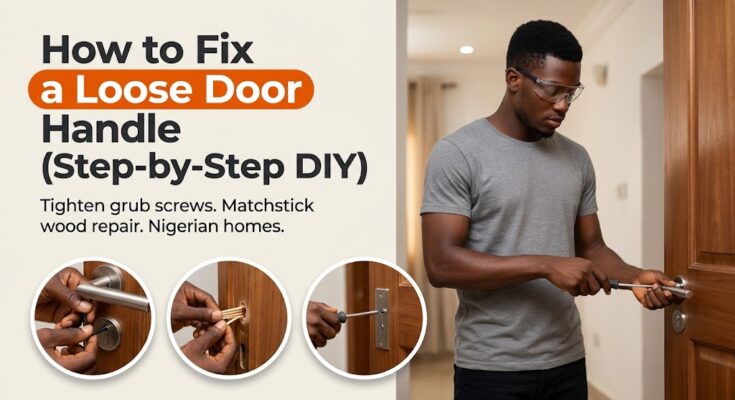
- Locate the tiny grub screw: Bend down and look directly underneath the neck of the handle lever (or along the side facing the door frame). You will see a small recessed threaded pin with either a hexagonal Allen hole or a tiny flat screwdriver slot.
- Test the spindle alignment: Remove the handle completely for a moment by backing the grub screw halfway out. Check the square steel bar (spindle) running through the door. Most spindles have a shallow groove or dimple running down one side; rotate the spindle so that the grooved face points directly toward the grub screw hole.
- Push the handle tight against the door: Slide the handle firmly back onto the square spindle until it sits snug against the base plate with minimal play.
- Tighten the grub screw firmly: Insert the matching Allen key or small flathead screwdriver and turn clockwise until the point of the grub screw bites straight into the groove of the steel spindle. Test the lever—it should feel rock solid without sliding inward or outward.
Pro Tip: In high-traffic living room or kitchen doors where the grub screw loosens every few months from vibration, dab a tiny drop of clear nail polish or removable blue threadlocker onto the threads of the grub screw before tightening it. That stops vibration from backing the screw out while still letting you unscrew it with an Allen key in the future.
Method 2: How to Fix a Loose Door Handle With Hidden Face Screws
Many modern Nigerian flats use round “rose” lever handles where you cannot see any wood screws at all on the surface. When the entire round base begins pulling away from the door, homeowners often feel stuck because there is nowhere to put a screwdriver.
Here is how to fix a loose door handle with concealed mounting plates:
- Find the hidden release notch: Run your fingernail around the bottom edge of the decorative outer metal ring (the rose cover). You will feel a small flat slot or circular dimple at the bottom (6 o’clock position).
- Pop or unscrew the outer cover cap: Insert the tip of a small flathead screwdriver into the notch and gently twist to pop the thin metal cover ring off. (Note: On some brass or stainless models, the outer ring isn’t snap-on—instead, you grip the round ring with your hand and twist the entire ring counter-clockwise to unscrew it off the base).
- Slide the cover down the lever: Once popped loose, slide the decorative ring out of the way along the handle neck to expose the galvanized steel mounting plate underneath.
- Tighten the exposed mounting screws: Use a Phillips screwdriver to tighten all the wood screws or through-bolts holding the inner plate to the door. If the screws spin endlessly without gripping the wood, jump straight to Method 3 below to repair the stripped wood before snapping the cover ring back on.
Method 3: Repairing Stripped Screw Holes in Wooden Doors (The Matchstick Trick)
This is the most common door problem in Nigerian homes. When a heavy wooden door swells during the rainy season and starts binding against the frame—a separate issue you can solve using our guide on how to fix a sticking door—people yank hard on the metal handle to force the door open. Within weeks, the short wood screws rip right out of the timber, leaving wide, crumbly holes that can no longer hold a screw thread.
Replacing a short screw with a fatter screw rarely works because a thicker screw head won’t fit flush inside the countersunk holes of your metal backplate. Instead, rebuild the original wood fibers using the classic carpenter’s matchstick-and-glue method:
- Unscrew and support the handle: Back out all the loose wood screws from the backplate and slide the handle back along the spindle (or remove the grub screw and take the handle off completely) so you have clear access to the damaged holes in the wood.
- Clean out loose wood dust: Blow any crumbled sawdust out of the stripped screw holes.
- Coat wooden splints in glue: Take three to five wooden matchsticks (with the flammable match heads snapped off) or flat wooden toothpicks and dip their tips into PVA wood glue or Topbond.
- Pack the hole tight: Push the glue-coated matchsticks deep into the stripped screw hole until no more can fit, then tap them gently with the handle of your screwdriver so they pack tightly together.
- Snap or cut flush: Use a utility knife or side cutters to score and snap the sticking-out ends of the matchsticks completely flush with the flat surface of the door.
- Drive the screws right back in: You only need to wait ten minutes for the glue to turn tacky. Position your handle backplate over the repaired holes and drive your original wood screws straight into the center of the packed matchsticks. As the screw threads cut in, they wedge the glued wooden splints violently outward against the walls of the hole, creating a grip that is often stronger than the original door wood.
Method 4: Fixing Handles on Hollow Flush Doors with Through-Bolts
In many modern Nigerian apartments and student hostels, interior bedroom and toilet doors are lightweight “hollow-core” flush doors made from thin plywood skins glued over a cardboard or softwood frame. When screws strip out of a thin 3mm plywood skin, even matchsticks have very little depth to hold onto.
When learning how to fix a loose door handle on a hollow or softwood door permanently, switch from wood screws to male-and-female connecting bolts (often called M4 sleeve bolts or through-bolts at hardware markets):
- Remove both the inside and outside door handles completely.
- Using a power drill and an 8mm wood bit, drill straight through the upper and lower screw holes from one side of the door all the way out the other side—taking care to drill straight so you don’t miss the holes on the opposite handle plate or clip the internal mortise lock body.
- Place both handles back onto the door spindle, push the long threaded bolt sleeves from one side through the door, and screw the matching machine bolts in from the opposite handle plate. Because the two metal handles now clamp tightly against each other through the door rather than relying on weak wood fibers, the handle can never pull loose again.
Step 5: Lubricate the Latch to Prevent Future Handle Damage
Nine times out of ten, a door handle comes loose because the door itself is hard to open or close. When the angled metal latch bolt sticks inside the lock body, or when the door hinges sag and force the latch to scrape against the metal strike plate on the door frame, everyone in the house pulls two times harder on the handle.
Once your handle is tight, spray a tiny burst of penetrating oil or smear a dab of multipurpose grease across the angled face of the brass latch bolt, then work the handle up and down ten times until the action feels buttery smooth. If the door groans when swinging open, check your hinges and consider incorporating a quick lock-and-hinge check into your monthly home maintenance checklist for Nigerian homes. And if you are doing a full hardware refresh across your bedroom or kitchen, you can pair this quick repair with our next tutorial on how to fix a drawer that won’t slide so every moving part in your furniture works effortlessly.
Common Mistakes to Avoid
Avoid these frequent DIY errors when figuring out how to fix a loose door handle:
- Stuffing paper or nylon into screw holes: Folding scraps of paper or plastic nylon bags into a stripped hole is a temporary shortcut that compresses and falls out within two weeks; always use solid wood splints and glue.
- Using a power drill on high torque to tighten face screws: Driving small brass or steel backplate screws with a cordless drill on high speed easily snaps the screw head right off inside the door; always do the final tightening by hand with a screwdriver.
- Forgetting to center the square spindle: If four inches of the steel spindle stick into the outside handle and only half an inch reaches into the inside handle, the inside handle will wobble and slip off no matter how hard you tighten the grub screw.
- Painting over the rose cover ring: When repainting a room, painters often brush emulsion or gloss paint over the edge of the door handle plate, gluing the cover cap shut; score cleanly around the metal ring with a razor blade before prying it off so you don’t peel the door paint.
Frequently Asked Questions (FAQs)
Why does my door handle droop downward even after I tighten all the screws?
If the base plate and grub screw are completely tight, but the lever still hangs down limp at an angle instead of springing back horizontally, the internal return spring (a flat coiled metal cassette tucked inside the back of the handle plate) has broken. Take the handle off the door and flip it over—you can buy replacement door handle return springs cheaply at a local building materials market (like Odunade, Dei-Dei, or Kenyetta market) or replace the handle pair in five minutes.
How do I fix a loose door handle when the screw head is completely stripped and won’t turn?
When you know how to fix a loose door handle, dealing with a rounded-out Phillips screw head is easy: stretch a wide, flat rubber band across the tip of your screwdriver and press hard into the stripped screw slot while turning slowly counter-clockwise. The rubber fills the chewed-up gap and gives you enough friction to back the ruined screw out so you can replace it with a fresh one.
What should I do if the square spindle bar inside the handle keeps sliding to one side?
Some modern doors use a “split spindle” (two half-bars joined by a spring), while standard mortise locks use a solid square bar. If a solid bar slides too far into one door handle, wrap a single layer of electrical tape around the middle section of the bar where it passes through the internal lock follower, and make sure both left and right grub screws bite firmly into the indented grooves on each end of the bar.
Taking fifteen minutes to apply these straightforward carpentry fixes proves that knowing how to fix a loose door handle is one of the easiest ways to make your home feel solid and well cared for. Whether you simply needed to tighten a hidden hex grub screw beneath the lever, pack stripped screw holes with glued matchsticks, or upgrade a hollow door with bolt-through sleeves, your doors will now open and close smoothly without a wobble.