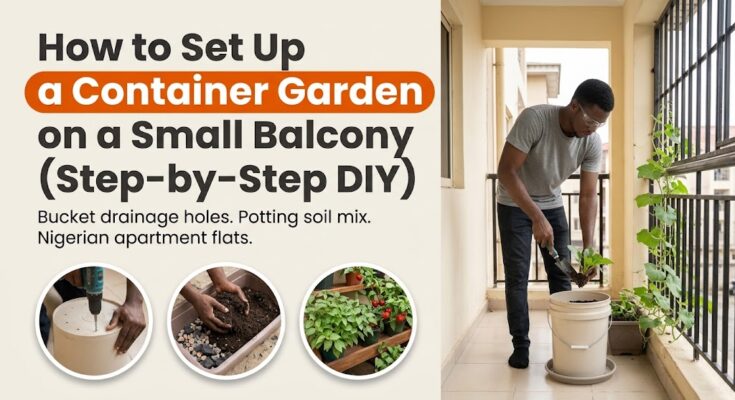
Learning how to set up a container garden on a small balcony lets you harvest fresh scent leaf, curry leaves, scotch bonnet peppers (ata rodo), and even fluted pumpkin (ugu) right outside your door, even if you rent an upstairs flat with zero compound soil.
Millions of Nigerians live in two-story walk-ups, tenement buildings, or modern block flats where the only outdoor space is a narrow concrete veranda enclosed by iron burglary-proof railings. Most tenants use that strip of space to store mop buckets, empty water kegs, and a drying rack for laundry, assuming you need a full backyard to grow food.
In reality, a sunny or half-shaded apartment balcony is one of the easiest places to keep a kitchen garden alive. Because your pots sit off the ground on a concrete slab, you never have to fight stubborn yard weeds, burrowing rodents, or wandering neighborhood goats and chickens. Even better, your crops sit two steps away from your kitchen sink, making it effortless to snip a handful of fresh herbs while your pot of stew is already simmering on the stove.
Drawing from practical urban gardening and home maintenance experience, this guide shows you how to set up a container garden on a small balcony without cluttering your walkway or staining your floor tiles. You will learn how to check your balcony’s sunlight and weight limits, repurpose everyday household buckets into clean planters, mix lightweight soil that won’t compact, and train climbing vines up your security grilles.
Why Knowing How to Set Up a Container Garden on a Small Balcony Matters
Growing plants on an elevated concrete slab is completely different from planting in open backyard earth. If you have read our guide on how to build a simple raised garden bed, you already know how much root depth and drainage affect tropical crops. On a balcony, those factors become even more important because your plants rely entirely on the small volume of soil inside each pot.
Mastering how to set up a container garden on a small balcony gives your upstairs home three immediate benefits beyond free groceries:
- Natural cooling shade: Lush green leaves and climbing vines absorb harsh afternoon solar heat before it hits your concrete walls and glass windows, keeping your living room noticeably cooler.
- Dust and noise filtering: A row of leafy pots along your balcony railing traps airborne harmattan dust and softens street noise from passing traffic and generators.
- Zero soil disease: Starting with clean potting soil in individual buckets avoids the nematodes and fungal root rot that often plague overused compound soil.
Best Crops for Nigerian Apartment Balconies
Before buying soil or drilling holes in buckets, match your plant list to the amount of direct sunlight your veranda receives. Walk out onto your balcony at 9:00 AM, 1:00 PM, and 4:00 PM to see how the building’s roof overhang and neighboring walls cast shadows across the floor.
Group your container crops according to these realistic light and space requirements:
- Full sun (5 to 7 hours of direct light): Tomatoes, okra, scotch bonnet peppers (ata rodo), tatase, dwarf pawpaw in 20-liter buckets, and lemongrass.
- Partial sun (3 to 4 hours of morning or late sun): Scent leaf (efinrin or nchuanwu), curry leaf, waterleaf, spinach (efo tete), spring onions, and ginger.
- Railing climbers (need vertical iron bars): Fluted pumpkin (ugu), cucumber, and climbing green beans, which can twine straight up your metal burglary-proof grilles.
- Low-water hardy plants: Aloe vera, snake plants, and rosemary, which thrive even if you travel for a long weekend during the dry season.
Tools and Affordable Materials Needed
You do not need expensive imported ceramic pots to figure out how to set up a container garden on a small balcony. Some of the most productive balcony gardens in Lagos, Enugu, and Abuja grow inside recycled household containers that cost next to nothing:
- Empty 20-liter paint buckets: Washed acrylic emulsion paint drums are deep enough for tomatoes, ugu, and pepper bushes.
- 4-liter paint tubs or cut gallon kegs: Ideal for shallow-rooted herbs like mint, spring onions, parsley, and seedlings.
- Woven polythene sacks or grow bags: Breathable, lightweight sacks that fold flat when not in use and drain excess rainwater naturally.
- Plastic drip trays: Shallow plastic saucers or old tray lids placed under every pot to catch muddy drainage water.
- Coarse drainage aggregate: Broken clay pot shards, washed gravel, palm kernel shells, or charcoal chunks.
- Potting mix ingredients: Dark loamy topsoil, cured poultry or cow manure, and coarse river sand (plus coco peat or decayed sawdust to cut down weight).
- Basic tools: A power drill or a thick iron nail and hammer for making drainage holes, a hand trowel, a watering can, and soft twine for tying vines.
Step 1: Audit Your Balcony Weight, Wind, and Drainage
Safety and neighborly courtesy come first when planning an upstairs garden. Wet soil is heavy—a single 20-liter paint bucket filled with soaked earth weighs between 22 and 28 kilograms. While reinforced concrete balconies in Nigerian flats are strong, you should never line up ten massive drums along the outer cantilevered edge of an old slab.
Always place your heaviest 20-liter buckets directly against the main load-bearing house wall or right over the structural concrete beams at the corners of the balcony. Keep lightweight plastic pots, herb tubs, and hanging baskets along the outer railing edge.
Next, inspect where water goes when you wash your balcony floor. Many upstairs balconies drain through a single PVC pipe spout sticking out of the wall. If muddy water from your pots pours out of that spout every morning, it will streak the exterior wall paint or drip onto your downstairs neighbor’s drying laundry. Placing plastic drip saucers under your pots and sweeping regularly as part of a monthly home maintenance checklist for Nigerian homes prevents neighbour disputes and keeps your veranda spotless.
Step 2: How to Set Up a Container Garden on a Small Balcony Using Vertical Space
In a narrow 3-foot by 8-foot balcony, covering the entire floor with round buckets leaves you nowhere to stand or hang clothes. The secret to how to set up a container garden on a small balcony is lifting your smaller pots off the floor so your walkway stays clear.
Put your walls and iron security grilles to work with these space-saving tricks:
- Use tiered wooden stands: Build a narrow two-tier or three-tier step shelf using planed hardwood planks—similar to the joinery in our guide on how to build a simple wooden shoe rack—so six herb pots take up the footprint of two.
- Train vines up security bars: Place one 20-liter bucket of ugu or cucumber at the corner of your metal burglary-proof grille and tie the young stems loosely to the iron bars with soft cloth strips.
- Hang rail planters inward: Secure sturdy S-hooks or wire brackets over the top bar of your balcony railing to hang lightweight 4-liter plastic tubs facing inside the balcony where they cannot fall onto anyone below.
- Leave a clear central path: Keep at least 24 inches of open floor tile down the center of the veranda so air circulates and you can step outside comfortably.
Step 3: Prepare Your Containers for Tropical Drainage
More balcony plants die from drowning in waterlogged buckets than from drought. When you buy a plastic bucket or repurpose an old paint drum, the solid bottom traps water completely. Even store-bought nursery pots often come with tiny, half-blocked dimples that clog after two waterings.
Turn every bucket or tub upside down before adding soil. Using a power drill with a half-inch bit—or a thick 4-inch iron nail heated with a candle or tapped carefully with a hammer—make six to eight generous drainage holes across the bottom base, plus four holes around the bottom side wall about half an inch up from the floor. Side-wall holes are crucial because flat bucket bottoms often seal tightly against flat ceramic floor tiles, trapping water inside even when bottom holes exist.
Once your holes are drilled, drop a two-inch layer of coarse gravel, palm kernel shells, or lump wood charcoal over the bottom of each bucket. This porous layer stops fine soil from washing out through the holes and keeps air flowing around the deep roots.
Step 4: Mix a Lightweight, Nutrient-Rich Potting Soil
Never scoop heavy red clay straight from a construction site into a balcony pot. Inside a confined plastic bucket, pure clay bakes into a solid brick under the dry-season sun and turns into suffocating mud when watered, starving roots of oxygen.
When learning how to set up a container garden on a small balcony, mix a lighter, fast-draining potting blend on a spread-out nylon sack or tarp:
- 40% Dark loamy topsoil: Sifted free of stones, roots, and trash.
- 30% Cured organic compost or manure: Well-rotted, dry cow dung or aged poultry manure that smells like rich forest earth (never raw, wet droppings).
- 20% Coco peat or old weathered sawdust: Holds moisture without adding heavy weight to your balcony slab.
- 10% Washed coarse river sand: Keeps the mix crumbly so water percolates straight down to the root tips.
Fill each container until the soil sits about one and a half inches below the top rim. That gap—called headspace—allows you to pour water in without muddy soil overflowing onto your balcony floor.
Step 5: Watering Habits and Protecting Your Balcony Tiles
Container plants dry out much faster than ground gardens because warm wind blows around all sides of the plastic pots and the concrete balcony floor radiates heat upward in the afternoon. During the peak dry season and harmattan months, small herb pots may need watering every morning, while large 20-liter buckets usually need a deep drink every one to two days.
Stick your index finger two inches down into the soil before watering. If the earth feels cool and damp, wait until the next day; if it feels dry and dusty, water slowly until a small trickle appears in the bottom drip tray. Water early in the morning before 8:00 AM or late in the evening after 5:30 PM so the afternoon sun doesn’t boil wet leaves or evaporate the moisture before the roots can drink.
To keep your balcony floor looking brand new, never let wet plastic or clay pots sit directly on unsealed porous tiles or cement screed for months on end, as trapped moisture leaves dark mineral rings and algae stains. Resting each pot on two thin strips of scrap hardwood or inside a plastic saucer lets air pass underneath. If your veranda floor is tiled, review our tutorial on how to clean and seal floor tiles so spilled water and fertilizer never penetrate the grout lines. Combining clean pots with tidy surroundings reflects the core principles covered in our overview of what is landscaping, even in a compact upstairs apartment.
Common Mistakes to Avoid on Small Balconies
Avoid these common beginner traps when figuring out how to set up a container garden on a small balcony:
- Using black buckets in blazing sun: Black plastic absorbs intense solar heat and cooks tender plant roots by midday; paint dark buckets white or cream on the outside, or wrap them in woven bamboo mats.
- Overcrowding a single pot: Planting four tomato seedlings inside one 10-liter bucket forces the roots to fight for food, resulting in stunted yellow stems and tiny fruit.
- Skipping liquid or top-dress feeding: Every time you water a pot, nutrients slowly wash out the bottom; add a handful of cured compost or vermicompost to the top of each bucket every three weeks.
- Leaving standing water in drip trays: Water sitting in plastic saucers for more than two days becomes a breeding ground for mosquitoes right outside your bedroom window.
Frequently Asked Questions (FAQs)
Can I grow fluted pumpkin (ugu) or tomatoes on a small upstairs balcony?
Yes, both thrive in containers as long as you give them a deep 20-liter bucket (at least 12 to 14 inches deep) and at least five hours of direct sunlight. Plant one ugu vine or one determinate tomato seedling per 20-liter bucket, place the bucket next to your iron balcony grille, and tie the growing stems to the metal bars for support.
How do I stop soil from washing out of my pots and dirtying the balcony floor?
When you know how to set up a container garden on a small balcony properly, you can stop muddy runoff completely by laying a small piece of old nylon window net (mosquito netting) or a layer of dry palm kernel shells over the drainage holes at the bottom of the bucket before adding soil. That simple mesh lets excess water pass through crystal clear while holding every grain of earth inside the pot.
What should I do if my balcony gets very strong wind during rainstorms?
Upper-floor balconies often catch strong gusts just before heavy tropical thunderstorms. Keep tall, top-heavy plants like okra or staked tomatoes tucked back against the solid house wall rather than out by the railing, and use broad, flat-bottomed 20-liter buckets instead of narrow, tall pots that tip over easily.
Taking a Saturday morning to apply these steps shows just how rewarding it is to master how to set up a container garden on a small balcony. By choosing the right bucket sizes, drilling proper side-wall drainage holes, mixing lightweight fertile soil, and training vines up your iron security bars, you can turn a bare concrete veranda into a cool, green mini-farm that feeds your kitchen all year round.