How to unclog a bathroom sink starts with noticing the problem early. A slow sink may not seem serious at first. You wash your hands, brush your teeth, and move on with your day. But when water begins collecting in the basin instead of draining away, even a simple morning routine becomes frustrating.
The good news is that you can often clear a clogged bathroom sink yourself without paying for a plumber. In many cases, the blockage comes from hair, soap residue, toothpaste, and other debris that gradually collect inside the drain.
My approach is to start with the simplest solution before taking anything apart. You do not need expensive equipment for every blockage, and rushing into a repair can create more problems than it solves.
In this guide, I’ll walk you through how to identify the likely cause, try a few practical methods, and know when it is better to call a plumber. These methods are suitable for many common bathroom sinks in Nigerian homes, although the fittings and drainage systems may vary.
Why Does a Bathroom Sink Get Clogged?
Before trying to clear the blockage, it helps to understand what might be causing it. This makes it easier to choose the right method instead of wasting time on solutions that will not work.
Here are some common causes:
- Hair: Loose hair catches around the stopper and inside the drain, trapping other debris.
- Soap and toothpaste: These residues build up over time and can contribute to a slow drain.
- Small debris: Dust, cotton wool, and small pieces of tissue can collect around the stopper or inside the pipe.
- A problem with the pipework: Poor pipe slope, damaged fittings, or a deeper blockage can prevent water from draining properly.
If the sink has become slower over several weeks, there is a good chance that debris has gradually accumulated. However, if several bathroom fixtures are draining poorly at the same time, the problem may be farther down the drainage system.
What to Check Before You Start
Start by running a small amount of water into the basin and observing how it drains. You do not need to fill the sink completely.
If the water drains slowly but continues moving, the blockage may be close to the stopper or inside the trap beneath the basin.
If the water does not drain at all, you may need to remove debris manually or use a suitable drain snake.
Pay attention to other fixtures, too. If the shower or bath is also draining slowly, or water bubbles up into the toilet when you use the sink, stop and contact a plumber. These symptoms can indicate a blockage in a shared drain.
Tools and Materials You May Need
Gather your supplies before starting so you do not have to interrupt the repair.
- A cup plunger suitable for sinks
- A bucket to catch water
- An adjustable spanner or suitable pliers
- Rubber gloves
- An old towel or rag
- An old toothbrush or small cleaning brush
- A flexible drain snake or hand auger, if necessary
- Replacement washers, if the existing ones are worn
You may already have some of these items at home. If not, check local hardware shops for current prices before buying.
You do not need to begin with chemical drain cleaners. Some products can damage certain plumbing materials, and their chemicals may splash during plunging or when opening a trap.
Method 1: Use a Plunger
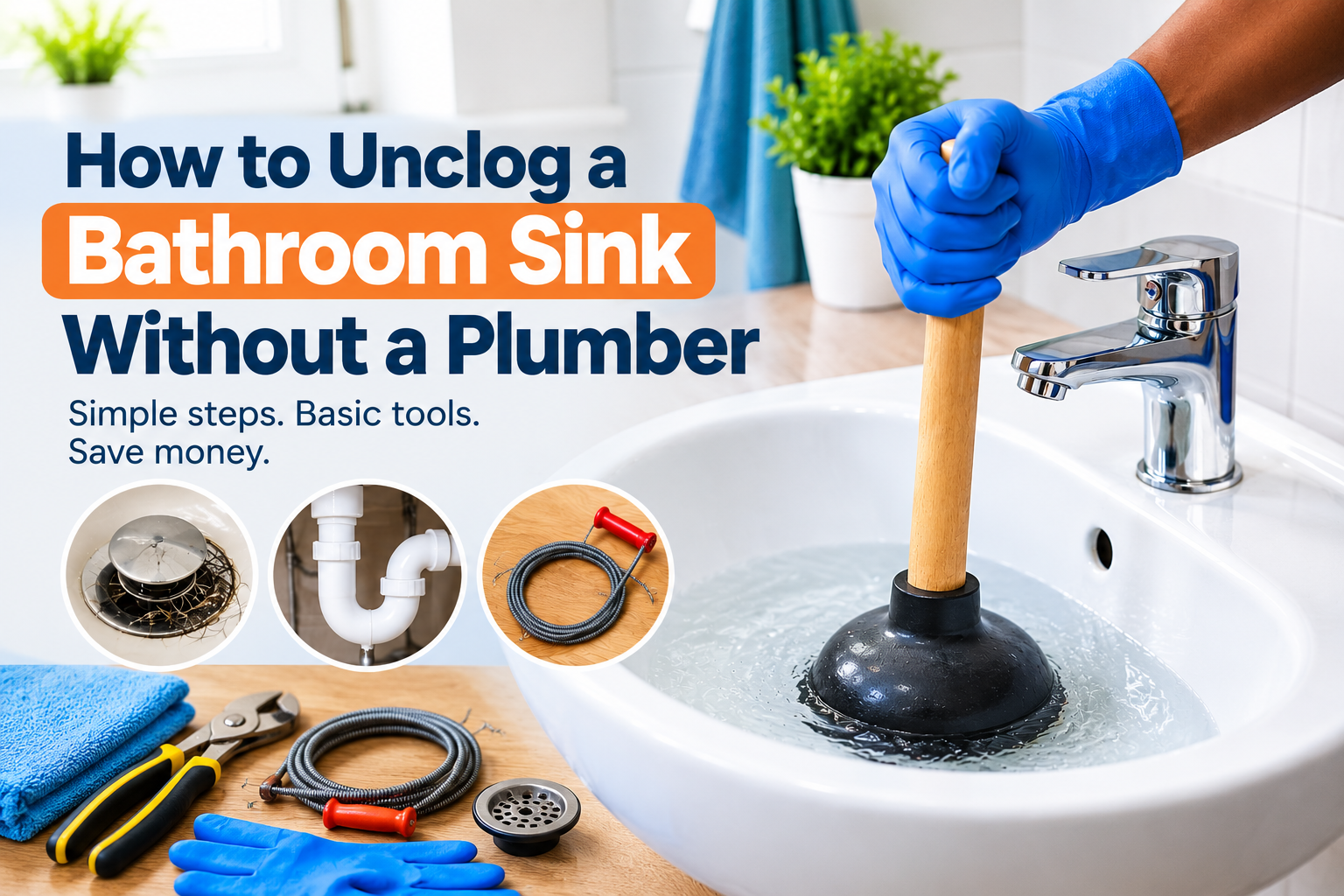
I would start with this method because it is relatively simple and does not require dismantling the pipework. A plunger can clear many minor blockages by creating pressure that moves the debris.
Step 1: Remove the stopper if possible.
Some bathroom sink stoppers lift out, while others unscrew or connect to a lever behind the basin. Remove yours if the design allows it.
Step 2: Block the overflow opening.
If your basin has an overflow hole, cover it with a wet cloth. This helps prevent air from escaping while you plunge.
Step 3: Add a little water.
Allow enough water into the basin to cover the rubber cup of the plunger, usually around 5–8 cm if the basin allows it.
Step 4: Position the plunger.
Place the cup directly over the drain. Make sure it forms a good seal around the opening.
Step 5: Plunge carefully.
Push down gently at first to release trapped air, then pump firmly about 10–15 times without lifting the cup away from the drain.
Step 6: Check the drainage.
Lift the plunger to break the seal and see whether the water starts moving freely. If necessary, repeat the process two or three times.
Once the water drains properly, run the tap for a short time to check whether the problem has cleared.
If there is no improvement, do not keep plunging indefinitely. The blockage may be caught around the stopper or inside the trap.
Method 2: Clean the Sink Stopper
Hair and soap residue often collect around the stopper, even when the visible drain opening looks clean.
If plunging does not solve the problem, this is a sensible next step.
- Remove the stopper according to its design. Some lift out or unscrew, while others are connected to a rod underneath the basin.
- Put on rubber gloves and remove any visible hair or debris.
- Use an old toothbrush and a little dish soap to clean the stopper and the surrounding drain opening.
- Rinse the removable parts with clean water.
- Reinstall the stopper and run the tap to test the drainage.
Be gentle when removing the stopper. If it is stuck or connected to an unfamiliar mechanism, check the fitting before forcing it. You do not want to damage a small component while trying to clear a minor blockage.
If the water still drains slowly, move on to the trap beneath the basin.
Method 3: Clean the P-Trap Beneath the Basin
The P-trap is the curved section of pipe underneath many bathroom sinks. It holds water that helps prevent sewer gases from entering the bathroom.
Hair, soap residue, and other debris can accumulate in this section, making it a useful place to check when the stopper is clean but the drain remains slow.
Before starting, place a bucket directly beneath the trap and keep an old towel nearby. Water will spill out when you open it.
Step 1: Locate the trap.
Look underneath the basin for the curved pipe connected to the drain.
Step 2: Loosen the connections.
Many traps have slip nuts that can be loosened by hand. If a nut is stiff, use an appropriate tool gently. Avoid applying excessive force, especially to plastic fittings.
Step 3: Remove the trap.
Carefully detach it and empty the contents into the bucket.
Step 4: Inspect and clean it.
Remove accumulated debris and clean the inside with a suitable brush. Rinse the trap with clean water.
Step 5: Check the washers.
Inspect the rubber washers or seals at the connections. If they are cracked, flattened, or damaged, replace them with compatible parts.
Step 6: Reassemble the pipework.
Fit the trap back into position and tighten the connections carefully. Follow the manufacturer’s instructions where available. Plastic fittings can crack if overtightened.
Step 7: Check for leaks.
Run the tap while watching the connections underneath the basin. If water drips from a joint, turn off the tap and check the alignment and seals before using the sink again.
If you are unsure how the trap connects, or the pipework looks damaged, it is safer to get help than to force the fittings apart.
Method 4: Use a Drain Snake
A drain snake, also called a hand auger, can help when the blockage is farther down the drain and cannot be reached by hand.
- Remove the stopper if necessary.
- Feed the snake slowly into the drain.
- Turn the handle gently as you advance it.
- If you feel resistance, rotate carefully to catch or break up the obstruction.
- Pull the snake out slowly and remove any debris.
- Flush the drain with warm water and check whether the flow has improved.
Do not force the tool through the pipe. Avoid using a screwdriver or rigid metal rod as a substitute because it can damage the pipework or push the obstruction farther down.
If the snake repeatedly meets resistance or the blockage does not clear, stop rather than risk damaging the drain.
Should You Use Baking Soda and Vinegar?
You may have seen advice recommending baking soda and vinegar for clogged drains. The mixture produces fizzing, but that reaction does not mean it will remove a stubborn blockage.
For light residue, you can try a small amount of baking soda followed by white vinegar, then rinse with warm water. However, this method is not a reliable solution for a complete blockage or a drain filled with hair.
Never combine this mixture with chemical drain cleaners. Do not pour boiling water into a drain if you are unsure whether the pipes or seals can withstand the temperature. Warm water is the safer choice for routine rinsing.
For a sink that will not drain at all, mechanical cleaning is generally a more useful next step.
Common Mistakes to Avoid on How to Unclog a Bathroom Sink
A few avoidable mistakes can turn a straightforward repair into a more expensive problem.
- Forcing plastic fittings: Excessive pressure can crack the trap or its connections.
- Ignoring worn washers: A drain may clear successfully but start leaking after reassembly if a seal is damaged.
- Pushing a drain snake too hard: Use controlled movements instead of forcing the tool through resistance.
- Mixing cleaning chemicals: This can release dangerous fumes or cause splashing.
- Ignoring recurring blockages: A clog that repeatedly returns may indicate a deeper drainage problem.
Take your time, and check for leaks before considering the job complete.
How to Prevent Bathroom Sink Clogs
Once the sink drains properly, a few simple habits can help prevent the problem from returning.
- Install a suitable mesh strainer to catch hair and small debris.
- Clean the stopper regularly, especially if you notice hair collecting around it.
- Remove visible debris before it enters the drain.
- Rinse away ordinary soap residue with warm tap water.
- Avoid putting cotton wool, thick debris, and other unsuitable materials into the basin.
Regularly checking the stopper is particularly useful because it allows you to remove debris before it builds up into a larger blockage.
When Should You Call a Plumber?
DIY repairs are useful for minor clogs, but some problems require professional attention.
Call a plumber if:
- Water backs up into the bath, shower, or toilet.
- Several drains in the home are slow at the same time.
- You notice sewage smells or unusual gurgling from other fixtures.
- The blockage returns shortly after clearing it.
- The sink remains clogged after the stopper and trap have been cleaned.
- The pipework is damaged or you are uncomfortable taking it apart.
These symptoms may indicate a deeper blockage or a problem with the drainage installation. A plumber can inspect the system and recommend the appropriate repair.
How Much Does It Cost to Unclog a Bathroom Sink in Nigeria?
The cost depends on the tools you already own, the parts you need, and whether you can clear the blockage yourself.
Here are illustrative budgeting estimates in naira. They are not verified current market prices, so check local shops and service providers before relying on them.
| Item | Estimated cost |
|---|---|
| Cup plunger | ₦3,000 – ₦7,999 |
| Drain snake or hand auger | ₦2,000 – ₦10,066 |
| Mesh strainer | ₦1,500 – ₦8,640 |
| Plumber call-out | ₦5,000 – ₦20,000 |
A straightforward blockage may take around 20–45 minutes to clear, although difficult clogs can take longer.
If you already have the necessary tools, attempting a simple repair yourself may save money. However, the cost of a professional repair can be worthwhile if the blockage is deep, the pipework is damaged, or repeated DIY attempts are unsuccessful.
Final Thoughts on How to Unclog a Bathroom Sink
A clogged bathroom sink does not always require a plumber. Start by checking the stopper and trying a plunger, then clean the trap if necessary. A drain snake may help with a deeper obstruction, provided you use it carefully.
The main thing is to work methodically rather than forcing fittings or pouring harsh chemicals into the drain. If several fixtures are affected, the blockage keeps returning, or you discover damaged pipework, call a qualified plumber.
With regular cleaning and a little attention to what goes down the drain, you can reduce the chances of dealing with the same problem again.
Did you get Value from this article on How to Unclog a Bathroom Sink? If Yes Please Share your Thoughts In comments. Thank You For Reading ❤️