
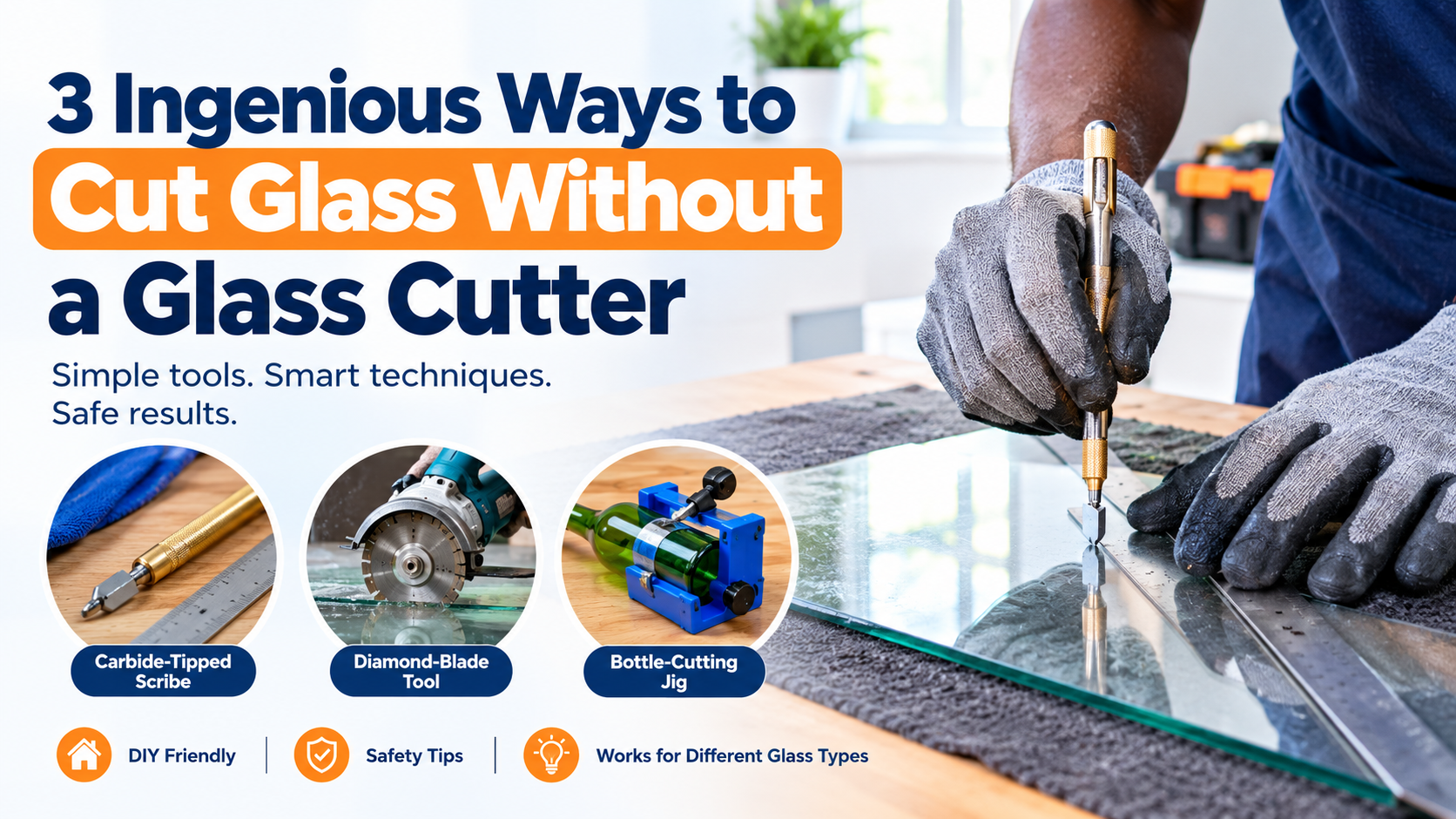
3 Ingenious Ways to Cut Glass Without a Glass Cutter
3 Ingenious Ways to Cut Glass Without a Glass Cutter can help you tackle a DIY repair or craft project when you do not have a traditional glass cutter. Whether you need to cut a suitable piece of flat glass or turn an empty bottle into a decorative item, several alternative tools may help you achieve your goal. The right approach depends on the type of glass, the tools available, and the result you want. Before starting, remember that glass can crack unpredictably and cause serious cuts, so choosing the correct method and using appropriate protective equipment are essential.
Can You Cut Glass Without a Glass Cutter?
Yes, certain types of glass can be cut without a conventional handheld glass cutter. However, the method you choose matters. Some tools create a controlled score on the glass surface, while others use a suitable abrasive blade to cut through compatible glass.
If you are exploring 3 Ingenious Ways to Cut Glass Without a Glass Cutter, it is important to understand the difference between scoring glass and cutting completely through it. Scoring creates a controlled line along which suitable glass can be separated. Cutting with a compatible blade removes material along the cutting path.
A thin piece of ordinary glass, a glass bottle, and a thick glass panel require different approaches. A technique that works for one project may be unsuitable for another.
Important safety warning: Never attempt to cut tempered glass. It is designed to shatter into many small pieces when damaged. Laminated glass also requires specialised equipment and handling. If you cannot identify the type of glass you have, consult a qualified glazier before proceeding.
1. Use a Carbide-Tipped Scribe to Score Glass
A carbide-tipped scribe is a pointed tool with a hard carbide tip. Certain models are designed for scoring glass, making them a possible alternative to a traditional glass cutter for suitable straight cuts.
This is one of the more practical options to consider when researching how to cut glass without a glass cutter. However, not every carbide scribe is suitable for this purpose. You must check that the tool is specifically designed for scoring the type of glass you intend to cut.
This method is generally most appropriate for compatible, thin, flat, annealed glass. It is not suitable for every glass thickness or type.
What You Will Need
- A carbide-tipped scribe specifically designed for glass scoring
- A straightedge or metal ruler
- A stable, flat work surface
- Protective eyewear
- Appropriate cut-resistant hand protection
- Suitable support for the glass
Step-by-Step Instructions
Step 1: Confirm that the glass can be cut
First, identify the type of glass you have. Ordinary annealed glass may be suitable for scoring, but tempered glass must not be cut after tempering. If you cannot identify the glass, ask a qualified glazier for advice.
Step 2: Measure and mark the cutting line
Use a ruler and a suitable marker to indicate where the cut should run. Double-check your measurements before proceeding. An incorrectly placed score can ruin the piece, especially when the glass is being cut to fit a particular space.
Step 3: Secure the glass
Place the glass on a stable, flat surface with suitable support underneath. Make sure it cannot slide, rock, or bend during the operation.
Step 4: Check that the scribe is suitable
Not every carbide-tipped scribe is designed for glass cutting. Check the manufacturer’s instructions before using the tool. A generic pointed scribe may scratch the surface without creating a controlled score.
Step 5: Follow the manufacturer’s scoring instructions
Use a suitable straightedge as a guide and score the glass according to the tool manufacturer’s directions. Avoid repeatedly scratching the same line in an attempt to make it deeper. Multiple uncontrolled scratches can weaken the glass unpredictably.
Step 6: Assess the score before separating the glass
Glass scoring requires the correct pressure, support, and breaking technique. If the score is incomplete or irregular, or if the glass starts cracking away from the intended line, stop. Never force the glass apart.
Advantages of This Method
- It may be relatively inexpensive if you already own a suitable tool.
- It can work for straight cuts on compatible flat glass.
- It does not require a powered cutting machine.
Limitations
A carbide scribe is not automatically a substitute for a proper glass cutter. Using an unsuitable tool can produce a poor score or an unpredictable break.
Best for: Suitable straight cuts on compatible, thin, flat, annealed glass.
When considering these 3 Ingenious Ways to Cut Glass Without a Glass Cutter, remember that a glass-rated scoring tool is useful only when the material and cutting technique are appropriate.
2. Use a Diamond-Blade Tool for Controlled Cutting
A diamond-blade cutting tool may be suitable when scoring and separating the glass is not the right approach for your project. Diamond blades use an abrasive cutting edge to remove material and can be used on certain types of glass when the blade and machine are specifically designed for the job.
Unlike a scoring method, this approach cuts along the intended path. However, it requires appropriate equipment, careful handling, and suitable protective measures.
This is not necessarily the best option for beginners. If you have never operated glass-cutting equipment, consider getting professional assistance rather than experimenting with a powered tool.
What You Will Need
- A cutting machine approved for the specific glass material
- A compatible diamond blade
- Suitable eye and face protection
- Hearing protection where required
- Appropriate respiratory protection if the process creates hazardous dust
- A stable support or clamping system designed for the job
Some cutting systems require water cooling. Use only equipment designed for the intended wet-cutting process, and follow its electrical and water-safety instructions. Never improvise a water supply around an ordinary powered tool.
Step-by-Step Instructions
Step 1: Check the blade and machine specifications
Confirm that both the cutting machine and blade are suitable for the type and thickness of glass you intend to cut. A blade designed for ceramic tiles or masonry is not automatically appropriate for glass.
Step 2: Prepare the work area
Choose a secure, uncluttered workspace with enough room to support the material. Keep other people away from the cutting area and ensure that fragments cannot strike anyone.
Step 3: Measure and mark the cut
Mark the intended cutting path and double-check the measurements. If you are working with a valuable mirror, a large glass panel, or a piece that must fit precisely, consult a professional glazier before proceeding.
Step 4: Secure the glass according to the equipment instructions
The glass must be supported without bending or experiencing uneven pressure. Never hold a small piece of glass by hand close to a rotating blade.
Step 5: Follow the approved cutting procedure
Operate the machine according to the manufacturer’s instructions for cutting speed, feed rate, cooling, and material handling. Do not force the blade through the glass. If the material vibrates, chips excessively, or begins to crack unexpectedly, stop the machine safely.
Step 6: Inspect the finished edge
A cut edge can be extremely sharp even when it looks smooth. Do not run your fingers along it. Appropriate edge finishing may be necessary, depending on how the glass will be used.
Advantages of This Method
- It can cut compatible glass rather than relying on a scored line and controlled break.
- It may suit certain cutting jobs that are difficult to manage with scoring alone.
- Suitable equipment can provide repeatable results when correctly set up and operated.
Limitations
Powered cutting can produce dangerous fragments, chips, noise, and potentially harmful dust. An unsuitable blade or cutting method can damage the glass or cause injury.
Best for: Suitable glass-cutting projects where the correct diamond-blade equipment and safety measures are available.
Of the 3 Ingenious Ways to Cut Glass Without a Glass Cutter, this method requires particular care because it involves powered equipment. If the job involves a large panel or expensive glass, hiring a qualified glazier is usually the safer option.
3. Use a Purpose-Built Glass-Bottle Cutting Jig
If you want to turn an empty glass bottle into a decorative vase, lantern, planter, or craft item, a purpose-built bottle-cutting jig may be more practical than trying to cut the bottle freehand.
Many bottle-cutting jigs use a scoring wheel to create a line around a compatible bottle. The bottle is then separated using the device’s prescribed method. The jig helps guide the scoring line around the curved surface, but it does not eliminate the risks associated with cutting glass.
This technique is designed for compatible bottles, not for cutting windows, mirrors, or large flat glass panels.
What You Will Need
- A bottle-cutting jig designed for the bottle’s size and shape
- A compatible scoring mechanism
- Protective eyewear
- Appropriate cut-resistant hand protection for handling glass
- A stable work surface
- Suitable equipment or professional assistance for finishing sharp edges
Step-by-Step Instructions
Step 1: Choose a suitable bottle
Select a clean, empty bottle without visible cracks, chips, or other damage. Avoid unusual shapes or bottles with thick, uneven bases unless the jig manufacturer confirms that they are compatible.
Step 2: Check the jig’s compatibility
Read the manufacturer’s instructions to confirm the bottle dimensions and glass types the jig can handle. A bottle that does not sit securely in the jig may slip or produce an uneven score.
Step 3: Position the bottle
Place the bottle in the jig and adjust it as instructed. Make sure it is stable and that the intended cutting line is correctly positioned.
Step 4: Create the score
Operate the jig according to its instructions. Aim for the intended score rather than repeatedly running the scoring wheel over the same line. An uneven or interrupted score can cause the bottle to crack unpredictably.
Step 5: Follow the manufacturer’s separation method
Different bottle-cutting systems may use different separation procedures. Follow the instructions supplied with your device. Do not improvise with open flames, boiling water, ice water, or sudden temperature changes to force the bottle apart.
Step 6: Finish the edge safely
The separated edge may be dangerously sharp. Do not use the bottle as a drinking vessel or handle it casually until the edge has been properly finished for its intended purpose. If you cannot safely finish the edge with appropriate equipment, have a professional do it.
Advantages of This Method
- The jig helps maintain a consistent scoring line around a compatible bottle.
- It is more suitable for bottle crafts than attempting to score a curved surface by hand.
- It can be useful for repeated decorative projects.
Limitations
A bottle-cutting jig is designed for particular shapes and sizes. It does not guarantee that every bottle will separate cleanly, and the resulting edge needs proper finishing.
Best for: Decorative projects involving compatible glass bottles.
If your main goal is a bottle-based craft project, this is one of the most specialised options among these 3 Ingenious Ways to Cut Glass Without a Glass Cutter.
Which of These 3 Ingenious Ways to Cut Glass Without a Glass Cutter Should You Choose?
The right method depends on the project, the type of glass, and the equipment you can use safely. There is no single alternative that works for every glass-cutting job.
| Your project | Most practical option | Important consideration |
|---|---|---|
| Straight cut on compatible thin, flat glass | Glass-rated carbide scoring scribe or proper glass cutter | Scoring and separation require skill |
| Cutting compatible glass with powered equipment | Suitable diamond-blade cutting system | Requires the correct machine, blade, and protection |
| Turning a suitable bottle into a decorative item | Purpose-built bottle-cutting jig | Only for compatible bottles |
| Cutting tempered glass or a large, valuable glass panel | Professional glazier | Do not attempt a DIY cut |
If you only need one straight cut on a small piece of ordinary glass, buying or borrowing a proper glass cutter may be safer, simpler, and more economical than improvising. For bottle crafts, a purpose-built jig is more appropriate. For thick panels, expensive mirrors, door glass, or safety-critical applications, professional cutting is usually the better choice.
The purpose of exploring 3 Ingenious Ways to Cut Glass Without a Glass Cutter is to help you choose a realistic alternative—not to suggest that every method is equally suitable or safe.
Common Mistakes to Avoid When Cutting Glass
Even with the right tool, poor preparation can turn a simple DIY project into an injury or a damaged piece of glass. Avoid these common mistakes.
1. Trying to Cut Tempered Glass
Tempered glass is heat-treated to increase its strength. Cutting, drilling, or grinding it after tempering can cause it to shatter across the panel. It generally must be cut to size before the tempering process.
2. Using Excessive Force
Pressing harder does not necessarily create a better score. Excessive or uneven force can produce unwanted cracks and weaken the glass beyond the intended line.
3. Repeatedly Scoring the Same Line
Repeated passes can create multiple scratches instead of one controlled score. Follow the tool manufacturer’s instructions and stop if the score is irregular.
4. Using Sudden Heat or Cold to Force a Break
Rapid temperature changes can cause glass to crack unpredictably. A bottle may split unevenly, send fragments flying, or break in your hands. Do not improvise with flames, boiling water, or ice water as a substitute for proper cutting equipment.
5. Cutting Glass Without Protective Equipment
Glass fragments can injure your eyes, hands, and feet. Use suitable eye and face protection, appropriate cut-resistant hand protection, protective clothing, and footwear. Keep your hands away from the intended break line, and never hold glass in your lap while attempting to cut it.
Keep children and pets away from the work area.
6. Ignoring the Finished Edge
A newly cut edge can cause serious cuts even when no obvious splinters are visible. The edge must be finished appropriately for its intended use. Structural, load-bearing, and safety-critical glass should be handled by a qualified professional.
Frequently Asked Questions
Can I cut glass with a regular knife?
No. A regular kitchen or utility knife is not a reliable glass-cutting tool. It may scratch the surface, slip, or damage the material without creating a controlled score. Use a tool designed for glass or choose a suitable professional cutting service.
Can I cut glass with a piece of string and fire?
This method is sometimes suggested for bottles, but it is unreliable and can be dangerous. Heating glass unevenly can cause uncontrolled cracking, while an open flame introduces additional hazards. A purpose-built bottle-cutting jig or a professional service is a better choice.
Can I cut a mirror without a glass cutter?
A mirror generally has a glass layer with a reflective coating on the back. Some mirrors can be cut using suitable glass-cutting equipment, but the coating may be damaged and the glass must be compatible with the intended method. Do not attempt to cut tempered mirror glass. For a valuable mirror or a precise fit, consult a glazier.
Can I cut thick glass at home?
Thick glass requires tools and techniques appropriate to its thickness, composition, and intended use. It is more difficult to cut safely than many thin glass pieces. Do not assume that a tool suitable for thin glass will work on a thick panel.
Is it cheaper to cut glass myself or hire a glazier?
For a small, straightforward craft project, DIY may cost less if you already have suitable tools. However, buying specialist equipment, replacing damaged glass, or treating an injury can make the project more expensive than expected. For large panes, mirrors, door glass, or precision work, request a local quotation before deciding.
What is the safest alternative to a traditional glass cutter?
There is no single safest alternative for every type of glass. A glass-rated scoring tool may suit certain flat-glass projects, a compatible cutting system may be appropriate for other jobs, and a bottle-cutting jig may work for selected craft bottles. For tempered, large, valuable, or safety-critical glass, consult a qualified glazier.
Final Thoughts
These 3 Ingenious Ways to Cut Glass Without a Glass Cutter offer different options for suitable DIY projects: a glass-rated carbide scribe for certain straight scores, compatible diamond-blade equipment for appropriate cutting jobs, and a purpose-built jig for selected bottle crafts.
The best approach is to identify the glass before choosing a tool, follow the manufacturer’s instructions, and avoid forcing a crack or improvising with sudden temperature changes. Remember that not every alternative works for every material, and a newly cut edge can remain dangerously sharp.
If the glass is tempered, large, valuable, or safety-critical, let a qualified glazier handle it. A successful DIY project is not simply about making a cut; it is about achieving the result without unnecessary damage or injury.
